nautical.im
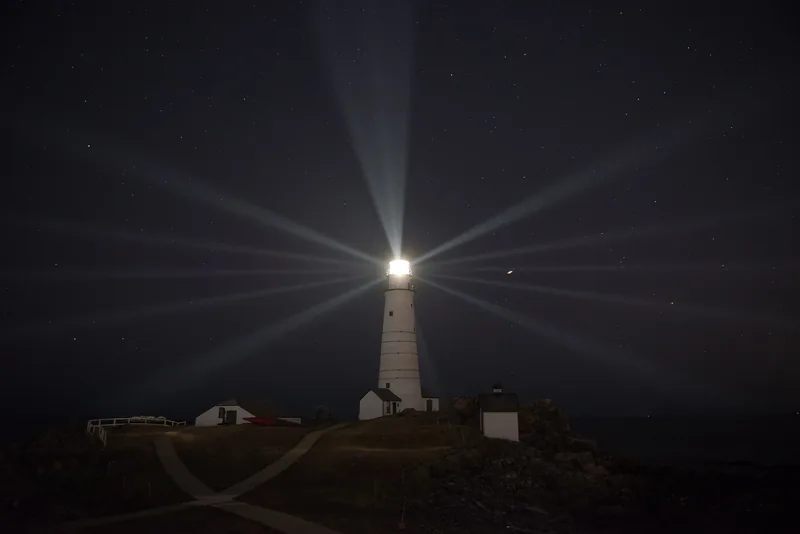
A light is a pattern, not just a tower.
Mariners read a lighthouse by its character: the colour, the grouping of the flashes, and the time the pattern takes to come round again. This site puts five published characters beside the authority’s own figures, and keeps historic numbers in view when they differ from today.
What this site is for
It is a site about working aids to navigation. The published character is Fl (2) 10s, and the published range of the light is 17 nautical miles.1 The same idea holds at Fastnet and at Hook Head, in the wording Irish Lights publishes today.
Trinity House describes the original tower, completed in 1698, as the first lighthouse to be built on a small rock in the open sea.1 From candles and open fires to a stepped glass lens, the job has been the same: make a light that a mariner can tell from the next light along the coast.
The character simulator
Pick Eddystone, Bishop Rock, Longships, Fastnet or Hook Head and watch the published pattern. The official wording stays on the page.
How a light is read
Six things a chart and a List of Lights actually tell a mariner about one station.
A desk of official figures
Tower height, height of the light, range and character, each cited to Trinity House or Irish Lights.
The Fresnel lens
What “fourth order” means, and a labelled section of the stepped glass.